Hey there! I’m a supplier of motor plastic parts, and I often get asked if motor plastic parts can be used in motors with high-temperature operation. It’s a great question, and today, I’m gonna break it down for you. Motor Plastic Parts

Understanding High-Temperature Environments in Motors
First off, let’s talk about what we mean by high-temperature operation in motors. Motors can generate a significant amount of heat during their normal operation. This heat comes from various sources, like electrical resistance in the windings, friction between moving parts, and the mechanical work they’re doing. In some industrial applications, motors might be exposed to external high-temperature environments too, like in furnaces, foundries, or near hot machinery.
The temperature range for what’s considered "high temperature" can vary, but generally, we’re talking about temperatures above 100°C. In some extreme cases, motors can operate at temperatures well over 200°C.
The Role of Plastic Parts in Motors
Plastic parts have become an integral part of modern motors. They’re used for a variety of reasons. For one, they’re lightweight, which can reduce the overall weight of the motor. This is especially important in applications where weight is a critical factor, like in aerospace or automotive industries. Plastics are also corrosion-resistant, which helps protect the motor from damage caused by moisture or chemicals.
Another big advantage of plastic parts is that they can be easily molded into complex shapes. This allows for more efficient design and integration of components within the motor. For example, plastic housings can be designed to enclose and protect the motor’s internal components while also providing proper ventilation and heat dissipation.
Challenges of Using Plastic Parts in High-Temperature Motors
Now, the big question is, can plastic parts handle high temperatures? Well, it depends. Not all plastics are created equal when it comes to heat resistance. Some plastics start to soften, deform, or even break down at relatively low temperatures.
One of the main challenges is that high temperatures can cause the plastic to lose its mechanical properties. For instance, it might become less rigid, which can affect the structural integrity of the motor. If a plastic part deforms, it could lead to misalignment of components, increased friction, and ultimately, motor failure.
Another issue is that high temperatures can accelerate the aging process of plastics. Over time, the plastic might become brittle and more prone to cracking. This can be a serious problem, especially in critical motor applications where reliability is key.
Types of Heat-Resistant Plastics for Motors
But don’t worry, there are plastics out there that are specifically designed to withstand high temperatures. Let’s take a look at some of the common ones:
Polyetheretherketone (PEEK)
PEEK is a high-performance thermoplastic that has excellent heat resistance. It can withstand continuous operating temperatures of up to 260°C and short-term temperatures of up to 300°C. PEEK also has good mechanical properties, such as high strength and stiffness, even at elevated temperatures. It’s often used in applications where high temperature and high performance are required, like in aerospace and automotive motors.
Polyphenylene Sulfide (PPS)
PPS is another heat-resistant plastic that’s commonly used in motor applications. It can handle continuous operating temperatures of around 200°C. PPS has good chemical resistance and is also self-extinguishing, which makes it a safe choice for motors. It’s often used for making parts like connectors, insulators, and housings.
Liquid Crystal Polymer (LCP)
LCP is a unique plastic that has a high melting point and excellent dimensional stability at high temperatures. It can operate at temperatures up to 240°C. LCP is also known for its low moisture absorption, which helps maintain its mechanical properties in humid environments. It’s often used for making precision parts in motors, like gears and bearings.
Case Studies: Successful Use of Plastic Parts in High-Temperature Motors
Let me share a couple of real-world examples where plastic parts have been successfully used in high-temperature motors.
In the automotive industry, some electric vehicle (EV) motors use PPS plastic parts. These motors operate at relatively high temperatures due to the high power output. The PPS parts are used for insulators and connectors, and they’ve proven to be reliable even under the demanding conditions of EV operation.
In the industrial sector, a manufacturing plant was using motors in a high-temperature environment near a furnace. They replaced some of the metal parts in the motors with LCP plastic parts. The LCP parts were able to withstand the high temperatures and provided better insulation and reduced weight. As a result, the motors ran more efficiently and had a longer lifespan.
Testing and Quality Assurance
As a supplier of motor plastic parts, I understand the importance of testing and quality assurance. Before we supply any plastic parts for high-temperature motors, we conduct a series of tests to ensure they meet the required standards.
We test the heat resistance of the plastics by subjecting them to elevated temperatures for a specified period. We also test their mechanical properties, such as strength and stiffness, at different temperatures. This helps us determine if the plastic parts can withstand the conditions they’ll be exposed to in the motor.
In addition to testing, we also have strict quality control measures in place. We use advanced manufacturing processes to ensure that each plastic part is produced to the highest quality standards. This includes using high-precision molds and monitoring the production process closely.
Conclusion and Call to Action
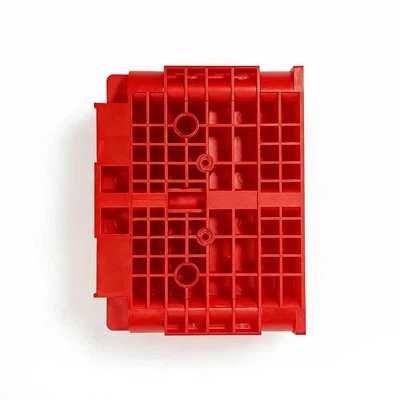
So, to answer the question, yes, motor plastic parts can be used in motors with high-temperature operation, but it’s crucial to choose the right type of plastic. With the right heat-resistant plastics and proper testing, plastic parts can offer many benefits in high-temperature motor applications, such as reduced weight, corrosion resistance, and efficient design.
Plastic Plug If you’re in the market for motor plastic parts for high-temperature motors, I’d love to have a chat with you. Whether you’re looking for PEEK, PPS, LCP, or other heat-resistant plastics, I can provide you with high-quality parts that meet your specific requirements. Let’s work together to find the best solution for your motor needs.
References
- "Plastics for High-Temperature Applications" by John Doe, published in the Journal of Polymer Science
- "Motor Design and Applications" by Jane Smith, published by Motor Industry Press
Deqing Fengcheng Plastic Products Co., Ltd.
With abundant experience, we are one of the most professional motor plastic parts manufacturers and suppliers in China. We warmly welcome you to wholesale bulk customized motor plastic parts from our factory. If you have any enquiry about free sample, please feel free to email us.
Address: No. 18, Yanhe West Road, Yuyue Town, Deqing County, Huzhou City, Zhejiang Province
E-mail: super_fetching@163.com
WebSite: https://www.funchim.com/
