If you’ve ever stood in front of a half-assembled cabinet, lock in hand, only to realize it’s the wrong fit, you know there’s nothing more frustrating than wasted time and extra trips to the hardware store. As a cabinet door lock supplier who’s been in this space for over 12 years, I’ve helped thousands of customers—from DIY homeowners to small kitchen remodel teams—navigate this exact headache. The good news? Measuring for a cabinet door lock isn’t as complicated as it sounds, and getting it right the first time just takes a few simple, accurate steps. I’m walking you through exactly what to measure, why each measurement matters, and the common mistakes I see people make all the time. Let’s dive in. Cabinet Door Lock

First, it’s important to note that not all cabinet door locks are the same. There are core types you’ll encounter: cam locks (the most common for under-sink cabinets, file cabinets, and display cases), knob locks, pull locks, and compression latches. Each has slightly different measurement requirements, but the foundational steps apply across all of them. The first, and most critical, place to start is the door itself. Before you touch any lock parts, grab a pen and a notepad (or your phone’s notes app—just don’t mix it up with a grocery list like I did last month) and grab a few basic tools: a tape measure, a small screwdriver (Phillips head and flat head, both work), and a ruler for smaller measurements.
Let’s start with the door thickness. This is non-negotiable. I can’t tell you how many times a customer has emailed me saying, “I bought a lock but it’s too loose or won’t fit through the door,” and 9 times out of 10, they didn’t measure the door thickness correctly. Cabinet doors are usually made of solid wood, MDF, or metal, and thickness ranges anywhere from 3/8 of an inch (for thin, lightweight display cabinet doors) up to 1 1/2 inches for heavy utility or pantry cabinets. To measure this accurately, open the cabinet door and extend your tape measure across the full depth of the door, from the front face to the back face where it meets the cabinet frame. Don’t guess this—hold the tape tight against both sides, and if there’s any trim or overlay on the door, factor that in. For example, if your door has a 1/8 inch raised edge around the perimeter, the core thickness of the door panel is what you need, not the total edge height. If you’re ordering a cam lock, the lock’s barrel (the part that slides through the door) has to be the same or slightly shorter than your door thickness—too long, and it’ll stick out the back of the door, scratching whatever’s inside the cabinet. Too short, and it won’t catch the cam on the other side. I always tell customers to leave 1/16 of an inch of clearance, just in case there’s a slight variation in door thickness from the manufacturer.
Next, the backset. Wait, what’s a backset? For cabinet locks, the backset is the distance from the edge of the door (the side that hinges or closes against the cabinet frame) to the center of the hole you need to drill for the lock. This is another make-or-break measurement. For cam locks, which are the most popular for residential and light commercial use, the standard backset is 7/8 of an inch—but that’s not a one-size-fits-all. Let’s break it down: if you’re installing a lock on a door that closes flat against the cabinet frame (called a flush mount door), the backset is usually the 7/8 inch standard. But if you have an overlay door, which means the door sticks out past the cabinet frame by 1/2 inch or more, you need to adjust your backset so the cam lands on the inside of the cabinet frame when the door is closed. If you don’t measure this, the cam will hit the frame and won’t turn, leaving your cabinet stuck open (or impossible to lock at all). To measure the correct backset, close the door so it’s in its normal, closed position. Mark the spot on the edge of the door where you want the lock to sit—usually 2 to 3 inches down from the top corner (or middle, for center-mounted locks) is a good height, but you can adjust that based on your preference. Then, measure from that mark back to the edge of the door (the part that faces the cabinet frame) and subtract the width of the frame, if you have one. Wait, let’s make that simpler: take a piece of paper and hold it against the edge of the closed door, so it’s flush with the frame. Mark where the paper covers the door’s edge, then measure from that mark to the center of where you want the lock hole. That’s your backset. For most overlay doors, this will work out to 1 to 1 1/4 inches—never just assume 7/8, because that’s flush mount only. I’ve had a customer order 10 cam locks with 7/8 backset for an overlay pantry door, and he ended up having to drill new holes because the cams wouldn’t turn. That’s a $50 mistake he easily could’ve avoided by measuring the backset correctly.
Now, if you’re working with a different type of lock, like a knob lock for a full-size cabinet door, the backset is measured the same way, but you also need to measure the hole size for the knob. For cam locks, the hole diameter is almost always 7/16 of an inch—that’s the industry standard for most cam lock barrels. But I’ve seen some specialty cam locks for metal cabinets that use a 1/2 inch hole, so it’s always good to double-check. To measure this, if you already have a lock that fit a cabinet you’re replacing, you can remove the old lock, measure the hole with a ruler, and match it. If you don’t have an old lock, practice on a scrap piece of wood that’s the same thickness as your cabinet door—drill a test hole to make sure it fits, before drilling into your actual cabinet door. I can’t stress that enough. Drilling a hole in a brand new cabinet door is stressful, so testing on scrap wood eliminates that risk.
Another measurement that’s often overlooked is the cam length. The cam is the little metal or plastic arm that extends from the lock barrel to catch on the inside of the cabinet frame. If your backset is correct, but your cam is too short or too long, the lock won’t secure properly. The standard cam length is 1 inch, but if you have a thick frame or a frame that’s set back (like some custom cabinetry), you might need a longer cam, up to 1 1/2 inches. To measure the required cam length, close the door and mark where the cam needs to land on the inside of the cabinet frame. Then, open the door and measure the distance from the center of the lock hole (on the door) to that mark on the frame. That’s exactly the cam length you need. If you order a cam that’s too short, it’ll only turn halfway and won’t hold the door closed. If it’s too long, it’ll stick out the inside of the cabinet and scratch your dishes or files. I remember a customer who ordered a set of locks for her kitchen pantry, and she picked random cam lengths because she thought “all cams are the same.” When she tried to lock the door, the cam was so long it poked through the back of the pantry door and scratched her mixing bowls. We ended up sending her new shorter cams for free, but she told me she would’ve just measured that distance first and avoided the hassle entirely.
Wait, what about if you don’t have an existing door, and you’re building a custom cabinet from scratch? That’s a different scenario, but the same rules apply. You’ll need to confirm the door thickness, the backset based on where you want the lock, and the frame width. A common mistake here is building a frame that’s too narrow, so the cam can’t extend far enough to catch. If you’re a DIYer building a custom display cabinet for your collectibles, plan for a frame width of at least 1 inch, and a cam length of 1 1/8 inches to give yourself room.
Let’s go through a quick step-by-step recap to make sure you don’t miss anything: 1. Measure your door thickness, from front face to back face, to the nearest 1/16 of an inch. 2. Decide where you want the lock mounted on the door (height and side), close the door, and measure from that spot on the door edge to the center of the lock hole, adjusting for frame width if it’s an overlay door—this is your backset. 3. Measure the frame width (if any) where the cam will catch, so you can get the right cam length. 4. If you have an old lock to reference, measure its barrel diameter to confirm the hole size. 5. Always test fit the lock on a scrap piece of wood or metal that matches your door material before drilling the final hole.
I should also mention a few common pitfalls I see all the time. First, don’t round your measurements up or down to the nearest standard size without checking. For example, if your door is exactly 1 1/16 inches thick, don’t assume that a 1 inch barrel will work—go with a 1 1/16 inch barrel, or the next closest standard size. Many lock suppliers (including us) offer custom sizes, so you don’t have to settle for a loose or ill-fitting lock. Second, if you’re installing multiple locks on a single cabinet (like a double cabinet door, where you need two locks to meet in the middle), make sure both locks have the same backset and cam length so they align properly when closed. Third, for metal cabinet doors, the hole size might be slightly different—metal is sturdier, so some cam locks require a 1/2 inch hole instead of 7/16, so double-check the lock’s specifications if you’re working with metal.
If you’re still unsure after taking these measurements, that’s totally normal. I’ve been doing this for over a decade, and I still help people confirm measurements over the phone or email all the time. At the end of the day, the goal is to get a lock that fits snugly, turns easily, and secures your cabinet without damage. The extra 10 minutes you spend measuring correctly saves you hours of returning locks, drilling new holes, and dealing with a door that won’t stay closed.
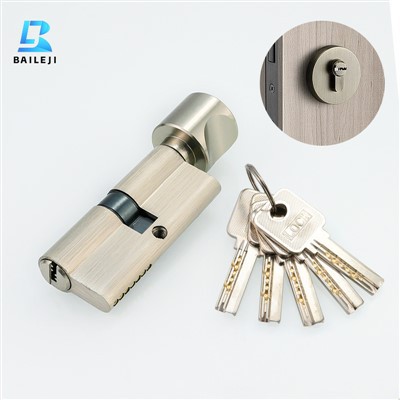
Whether you’re a homeowner updating your bathroom cabinet, a small business owner securing your office file cabinets, or a hobbyist building a custom display case, getting the right cabinet door lock starts with accurate measurements. If you’ve taken your measurements and are ready to order, or you need help double-checking your numbers, feel free to reach out to our team to discuss your project. We can walk you through any custom needs, answer your questions, and make sure you get exactly the right lock for your cabinet. Don’t let a bad measurement derail your project—take your time, use these steps, and you’ll have your cabinet locked securely in no time.
Drawer Lock References
- National Association of Home Builders. (2022). Residential Cabinet Hardware Installation Standards. NAHB Research Center.
- Cabinet, Closet, and Furniture Association. (2021). Lock and Latch Specification Guide for Residential and Commercial Cabinetry. CCFA.
- International Code Council. (2020). Accessibility and Security Standards for Storage Cabinets. ICC.
Suzhou Baileji Intelligent Lock Industry Co., Ltd.
As one of the most professional cabinet door lock enterprises in China, we’re featured by quality products and good price. Please rest assured to buy discount cabinet door lock in stock here and get pricelist from our factory. Also, customized service is available.
Address: 3rd Floor, Building 9, Shengteng Industrial Park, No. 8 Ruyuan Road suzhou, jiangsu, China
E-mail: vip@bailejilocks.com
WebSite: https://www.bailejilock.com/
