Hey there! I’m a supplier of electromagnetic instruments, and today I wanna chat about how to measure the phase shift of these nifty devices. Phase shift is a crucial aspect when dealing with electromagnetic instruments, as it can tell us a lot about how the instrument is performing and how it interacts with different electrical signals. Electromagnetic instruments
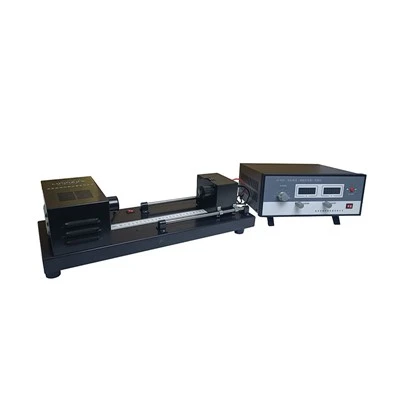
First off, let’s understand what phase shift is. In simple terms, phase shift is the difference in the timing of two waves. When we’re talking about electromagnetic instruments, it usually refers to the difference in phase between the input and output signals. This can happen due to a variety of reasons, like the properties of the materials used in the instrument, the circuit design, or even external factors like interference.
One of the most common ways to measure phase shift is by using an oscilloscope. An oscilloscope is a super useful tool that can display electrical signals as waveforms on a screen. To measure the phase shift with an oscilloscope, you first need to connect the input and output signals of your electromagnetic instrument to the appropriate channels on the scope.
Once you’ve got the signals displayed on the screen, you can use the oscilloscope’s built – in functions to measure the phase difference. Most modern scopes have a feature that allows you to select two waveforms and then calculate the phase shift between them. You’ll usually see the phase shift displayed in degrees. For example, if you have two sine waves and the phase shift is 90 degrees, it means one wave is a quarter – cycle ahead or behind the other.
Another method is to use a phase meter. A phase meter is a dedicated device designed specifically to measure the phase difference between two electrical signals. It’s a bit more straightforward than using an oscilloscope in some ways, as its sole purpose is to give you an accurate reading of the phase shift. You simply connect your input and output signals to the phase meter, and it’ll display the phase difference right away.
Now, when it comes to measuring phase shift in different types of electromagnetic instruments, there are some specific considerations. For instance, in transformers, phase shift can occur due to the magnetic coupling between the primary and secondary windings. To measure the phase shift in a transformer, you need to apply a known voltage to the primary winding and then measure the voltage and phase of the secondary winding. You can use an oscilloscope or a phase meter for this, just like we mentioned before.
In inductors and capacitors, phase shift is also a key characteristic. Inductors cause a phase shift where the current lags behind the voltage, while capacitors cause the current to lead the voltage. Measuring the phase shift in these components can help you understand their electrical properties and how they’ll perform in a circuit. You can measure the phase shift in an inductor or capacitor by connecting it to an AC power source and then using an oscilloscope or a phase meter to measure the phase difference between the voltage across the component and the current flowing through it.
It’s important to note that when measuring phase shift, you need to be aware of the frequency of the signal. Phase shift can vary depending on the frequency of the input signal. For example, in some electromagnetic instruments, the phase shift might be different at low frequencies compared to high frequencies. So, you should always make sure to measure the phase shift at the frequency that your instrument will be operating at in its normal application.
Also, environmental factors can affect the accuracy of your phase shift measurements. Things like temperature, humidity, and electromagnetic interference can all cause small variations in the phase shift. To get the most accurate results, try to measure the phase shift in a controlled environment. If that’s not possible, you can use shielding to reduce the effects of external interference.
Now, why is it so important to measure the phase shift of electromagnetic instruments? Well, for one, it can help you troubleshoot problems. If you notice an unexpected phase shift in your instrument, it could be a sign of a fault, like a damaged component or a wiring issue. By measuring the phase shift, you can pinpoint the problem and take the necessary steps to fix it.
In addition, phase shift measurements are crucial for ensuring the proper operation of your electromagnetic instruments in a system. For example, in power systems, accurate phase shift measurements are necessary for maintaining the balance between different phases and for ensuring efficient power transfer.
As a supplier of electromagnetic instruments, I know how important it is to have accurate phase shift measurements. That’s why our instruments are designed to be as reliable and accurate as possible. We use high – quality materials and advanced manufacturing techniques to ensure that our products perform well in different applications.
If you’re in the market for electromagnetic instruments and you’re interested in accurate phase shift measurements, we’d love to talk to you. Whether you’re working on a small research project or a large – scale industrial application, we’ve got the right instruments for you. Our team of experts can also provide you with support and advice on how to measure the phase shift of our instruments and how to integrate them into your system.
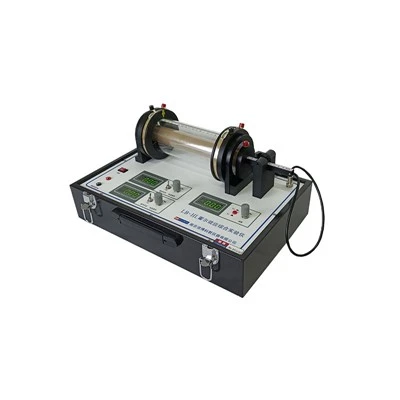
So, if you think our electromagnetic instruments could be a good fit for your needs, don’t hesitate to reach out. We’re here to help you make the most of your projects and ensure that your electromagnetic systems are working at their best.
Mechanical instruments References
- "Electrical Engineering Handbook" by Richard C. Dorf
- "Principles of Electric Circuits: Conventional Current Version" by Thomas L. Floyd
- "Power System Analysis and Design" by J. Duncan Glover, Mulukutla S. Sarma, and Thomas J. Overbye
Nanjing Longbow Scientific&Educational Instrument Co., Ltd.
As one of the most professional electromagnetic instruments manufacturers and suppliers in China, we’re featured by quality products and good service. Please rest assured to buy customized electromagnetic instruments from our factory. If you have any enquiry about pricelist, please feel free to email us.
Address: Room D, 22th floor, No.305, North Jiangdong Road, Nanjing,Jiangsu Province, China
E-mail: 79425380@qq.com
WebSite: https://www.lb-physics.com/
