Hey there, I’m Alex, and let’s cut the crap – if you run a manufacturing plant that uses process chemicals, you know how frustrating it is when those chemicals disappear faster than they should, or you get blindsided by a spike in usage that kills your budget. As a process chemicals supplier, I’ve spent the last 7 years talking to plant managers, shift supervisors, and ops guys who’ve lost their minds over unmonitored chemical consumption. Last month I was on a call with a steel mill in Ohio that over-ordered a flocculant by $120k because they had no clue their dosing pump was leaking 5 gallons an hour for 3 weeks. That’s the stuff I live for fixing, and today I’m breaking down exactly how to monitor that consumption without turning your control room into a NASA mission control. Process Chemicals
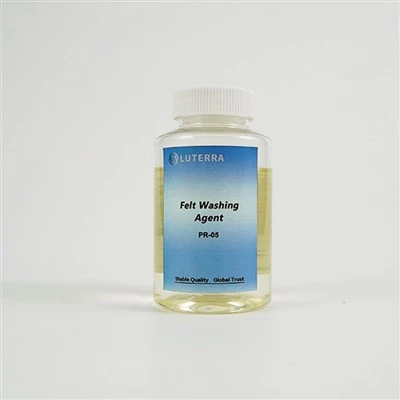
First off, let’s get one thing straight: process chemicals aren’t just “stuff you pour into a tank” – they’re tailored to your plant, your equipment, and your production line. I’ve seen way too many plants use a one-size-fits-all approach, and surprise, it never works. So step one isn’t even buying a fancy sensor – it’s mapping your entire chemical workflow. I mean, really mapping it: where does each chemical come in? Is it stored in bulk totes, small drums, or day tanks? How does it get from storage to the process unit – pumps, gravity, hoses? And most importantly, where does it actually end up? Is it used in a water treatment system, a metal plating line, a food processing mixer? Let me give you an example: a food and beverage plant I worked with thought they were using 10 gallons of caustic soda a day for CIP (clean-in-place) cycles, but when we mapped it, they realized 30% was leaking through a corroded transfer hose that no one checked. Once they fixed that leak, their consumption dropped by a third, and they didn’t even have to adjust the final dosage. Mapping sounds basic, but it’s the foundation. If you don’t know where every drop goes, the rest is just guesswork.
Next up: picking the right monitoring tools, and no, you don’t need to drop $50k on every gadget out there. Let’s start with the easy, no-tech stuff first – because a lot of issues are just human error. I’m talking about daily inventory checks that are actually accurate, not just scribbling numbers on a whiteboard that gets erased every Friday. A lot of plants weigh their bulk totes, right? But if you just write down the weight when the delivery guy leaves, you’re missing consumption between checks. What if you do a daily weight check, same time every day, with a calibrated scale? That’s free (if you already have a scale) and takes 5 minutes a day. For small drums, same thing – a dipstick and a quick measurement. I had a paper mill client who was off by 15% on their biocide consumption for months, until the night shift supervisor admitted he “borrowed” drums for a small cleaning project and forgot to log it. Daily inventory catches that. Now, for the tech side: if your chemicals go into a process unit where you need precise dosing, inline flow meters are non-negotiable. But not just any flow meter – pick one that works for your specific chemical. For example, if you’re using a viscous polymer, a regular mechanical flow meter will get gunked up and give bad readings. Go for a magnetic or ultrasonic flow meter instead. And here’s a pro tip I tell every client: get meters with remote data access. You don’t want to walk to the process unit at 2 a.m. to check why the reading is spiking. Most modern meters sync to your phone or control room dashboard, so you get alerts if flow is too high, too low, or not moving at all. One of my favorite stories is from a water treatment plant where the flow meter alerted the control room at 1 a.m. that the anti-scalant flow was zero. Turns out a fish got sucked into the line and blocked it – if they’d waited till morning, their reverse osmosis system would’ve scaled up and cost $50k in repairs. Alerts are game-changers. Also, don’t sleep on level sensors for day tanks. If you have a small tank that feeds the process, a simple ultrasonic level sensor can tell you exactly how much is being used every hour. No more guessing if the tank ran dry because of a pump failure.
Now, the part that trips almost every plant up: data analysis. Getting data is half the battle, but actually using it is where the magic happens. You can have a dashboard with 20 different numbers, but if you’re not looking at trends, it’s useless. Let’s say you use 5 gallons of chemical per hour during a normal production run. If one day you’re using 7 gallons, you want to know why. Is production higher? Is there a leak? Did someone adjust the dose by mistake? I work with a software tool (shoutout to the one I recommend to every client – no, I’m not a shill, it just works) that pulls all flow, level, and inventory data together and flags anomalies. One of my paint manufacturing clients used this tool and noticed that every Monday, their consumption of dispersant jumped by 20%. Turns out, the maintenance crew would run extra cleaning cycles over the weekend and not log the chemical they used. Once they started logging that weekend use, their trend lines normalized, and their forecasts got way more accurate. The other thing with data is comparing it to actual production output. Chemical consumption should correlate with how much product you’re making, right? If you make 1000 units, you use X amount of chemical; 2000 units, you use 2X. If the math doesn’t add up, you have a problem. I’ve had plating shops where consumption of their acid etchant was 2x higher when production was the same, and it turned out they were over-dosing to fix quality issues that could’ve been fixed with a better pre-treatment step. The data didn’t just catch waste – it helped them save on raw material and improve product quality.
Wait, let’s talk about leaks – because 9 times out of 10, unexpected consumption is just leaks, and they’re easy to miss. I mentioned that steel mill earlier, but leaks aren’t just from hoses. They can be from faulty valves, cracked tanks, even loose connections in piping. How do you catch them? Besides flow meters, do regular line walks – but not just the quick walk around the unit. Bring a rag and smell test. I once found a small leak on a tote valve that was invisible to the eye, but smelled strongly of the process chemical when I wiped the valve with a rag. The other trick for leaks is a “blank run” test. Every few months, when production is down for a shift or two, run your entire chemical transfer system without feeding any chemical into the process unit. If the flow meter is still reading something, you have a leak. It’s simple, takes an hour, and could save you thousands. Also, if you have bulk storage, make sure your tanks are on secondary containment. Not only is it required by EPA in most places, but it also lets you catch leaks before they get into the ground or your process. One of my food industry clients actually had a leak under their day tank that they didn’t notice for 6 months – until secondary containment had 150 gallons of chemical in it. That’s a clean-up bill and a production delay that could’ve been avoided.
Now, human factor – because even the best tools won’t work if people aren’t using them. I’ve seen plants spend a ton on sensors and software, then the operators just ignore the alerts because they get too many false ones. So, make your alerts useful. If you have a flow meter alerting you that flow is 10% too high every day, that’s a false alert. Tune the alerts to only flag things that actually matter – like 50% over or under, or zero flow for more than 10 minutes. Also, train your team. It’s not enough to just hand someone a meter and say “use this”. Show them how to read it, what a normal value looks like, how to log it correctly, and what to do if an alert pops up. I do on-site training for all my clients because I’ve seen first-hand how a 15-minute training session can cut errors by 70%. The night shift crew is often the worst for missing logs because they’re shorthanded, so make logging as easy as possible – maybe a quick scan of a barcode on the drum or tote, instead of filling out a paper form. One of my packaging clients switched to a simple mobile app for logging, and night shift logging errors dropped from 40% to 2% overnight.
And let’s not forget about supplier collaboration – that’s the big one, since I’m in the process chemicals game. A lot of plants treat their chemical suppliers like just a vendor that shows up with drums. But if your supplier knows your process, they can help you monitor consumption too. I work closely with every client’s ops team to customize their monitoring setup. For example, if a client’s polymer is giving them inconsistent readings, I’ll come test it on-site to make sure the flow meter is compatible. I also share industry benchmarks – not to say “your consumption is higher than average”, but to say “here’s how other plants with your process are using this chemical, maybe we can adjust your dose”. Last year, a battery manufacturing client was using 15% more cathode coating chemical than their peers, and when I looked at their data, we realized their dosing pump was calibrated wrong. We adjusted it, and they saved $200k a year. Also, if you’re noticing a spike in consumption, your supplier might have a solution. Maybe a different grade of chemical that’s more efficient, or a different delivery method (like bulk totes instead of small drums, which reduce waste from drum residue). I’ve had clients switch from drums to bulk delivery, and their waste from leftover chemical in drums dropped by 12% because we can use transfer systems that get almost every drop out.
Wait, let’s talk about common mistakes I see all the time. First, over-monitoring. You don’t need 10 flow meters for every chemical. Pick the critical ones – the ones that cost the most, that have the biggest impact on production, or that have a history of waste. Second, ignoring small anomalies. That 5% spike one day – it’s probably nothing, but if it happens 3 days in a row, that’s a problem. Third, not updating your monitoring setup as your process changes. If you added a new production line, you need to adjust your flow meters or inventory checks. I had a client that expanded their plant and forgot to add a flow meter to the new line, so their total consumption looked fine, but the new line was wasting 20 gallons a day for months. Fourth, not calibrating your tools. Flow meters, level sensors, scales – all of them drift over time. If you don’t calibrate them every 6 months, your data is garbage. A simple calibration check costs less than a new meter, and saves you way more in wasted chemical.
Let me wrap this up with a real example that sums it all up. A mid-sized chemical processing plant in Indiana reached out to me 18 months ago, saying their annual chemical waste was $300k, and they had no clue why. First, we mapped their entire workflow – found a 20% leak in a transfer line that they’d missed because the hose was under a pile of pallets. Then, we added daily inventory checks with calibrated scales, installed inline flow meters on their two most expensive chemicals, and set up custom alerts. We also trained their shift crews on logging and data checks, and I shared benchmark data from similar plants. After 6 months, their waste dropped by 75% – that’s $225k a year in savings. And they didn’t have to change their production process at all. All we did was get visibility into what was already happening.
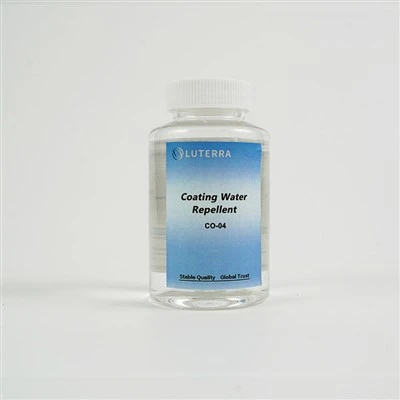
If you’re tired of over-paying for process chemicals, dealing with unexpected spikes, or just not knowing where your chemical is going, you don’t have to figure this out alone. I’ve helped dozens of plants get control of their consumption, and I can help you too. Whether you need help mapping your process, picking the right monitoring tools, or just looking at your data to find waste, reach out to our team to connect and chat about what you’re dealing with. No sales pitch, no pressure – just guys who know process chemicals and plant ops, ready to help you save money.
Enhancer References:
- Guidelines for Chemical Process Monitoring, Occupational Safety and Health Administration (OSHA)
- Industrial Flow Meter Selection Guide, International Society of Automation (ISA)
- Process Chemical Waste Reduction Best Practices, U.S. Environmental Protection Agency (EPA)
Luterra Advanced Materials Co., Ltd.
We are one of the most experienced process chemicals manufacturers and suppliers in China, also support customized service. With a professional production team, we are able to meet the needs of the majority of our customers. Please feel free to buy high quality process chemicals made in China here from our factory.
Address: East End of Jingting Road, Caterpillar Industrial Zone, Qingzhou City, Weifang City, Shandong Province, China
E-mail: info@luterra-chem.com
WebSite: https://www.luterra-chem.com/
