If you’ve ever had a part that needs dead-flat surfaces, super tight tolerances, and no burrs or leftover grime from other machining processes, you know how important a precision surface grinder is. As someone who’s been supplying these machines and troubleshooting customer setups for years, I get all the questions: What can this thing actually grind? Can it handle my weird metal alloy? Is it worth running it on a super-soft plastic that’s just too delicate for a mill? Let’s break it down, no overly technical jargon or corporate fluff—just straight talk from someone who’s been around these machines long enough to know their limits and their sweet spots. Precision Surface Grinder
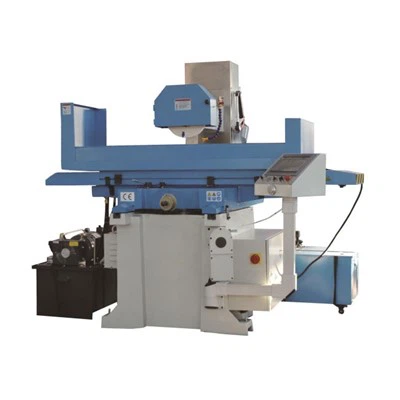
First off, let’s get one quick thing out of the way: a precision surface grinder isn’t the same as the big, clunky grinder you might’ve used in a shop class for rough shaping. These machines are built for material removal on flat, parallel surfaces, with tolerances that can hit within a fraction of a human hair. That precision means they work best on materials that are (for the most part) rigid, have consistent hardness, and don’t flex or melt mid-grind—though, as you’ll see, there are exceptions.
Let’s start with the most common stuff everyone uses: ferrous metals. This is where surface grinders have always shined, and it’s where most of our customers make their bread and butter. Carbon steel is a huge one. From mild steel (the soft, bendy stuff used in car frames and home decor parts) to high-carbon steel (harder, used for tools like wrenches, dies, and small gears), a precision surface grinder handles all of it. The key here is the grinding wheel—we usually recommend aluminum oxide wheels for steel, because that material is tough enough to bite into the metal without wearing down too fast. I had a customer a few months back making custom dies for fabric cutting, and he was grinding 1095 high-carbon steel to a flatness of less than 0.0005 inches (that’s 0.0127 mm, for anyone who uses metric) on his surface grinder. No issues, no warping, just perfect parts every time.
Then there’s alloy steel—think stainless steel, tool steel, and all those specialty blends with chromium, nickel, or molybdenum added for strength, corrosion resistance, or hardness. Stainless steel is super popular right now, especially for parts in food processing, medical devices, and outdoor equipment. The problem with stainless is that it’s gummy—wait, that’s the shop term, not a technical one, but it’s exactly what it is. It clings to the grinding wheel, causes smearing, and can leave a rough surface if you don’t adjust your parameters right. But a good surface grinder, with the right wheel (often a ceramic alumina or even a diamond wheel for hard 440C stainless), can grind stainless to mirror finishes. I had a medical parts client who was grinding 316L stainless for pacemaker housings, and he needed a Ra (surface roughness) of 0.2 microns—standard milled parts hit around 1.6, so the surface grinder was the only way to get that smooth, burr-free finish that’s safe for implantation. Tool steel, like A2 or D2, is another big one for mold and die makers, who rely on surface grinders to get the cavities and bases of their molds perfectly flat before hardening.
Now, what about non-ferrous metals? This is where a lot of people get confused, because surface grinders can handle them, but you have to adjust your approach. Aluminum is probably the most common non-ferrous material we grind. It’s soft, it’s lightweight, and it’s used in everything from aerospace parts to phone components. The problem with aluminum is that it’s super ductile, so it’s prone to melting or smearing on the grinding surface if you use a wheel that’s too aggressive, or if you don’t keep it well-cooled. For aluminum, we usually recommend a porous silicon carbide wheel, because it doesn’t clog up as fast, and flood coolant is non-negotiable here—we’re talking full pressure, to keep the part cool and carry away the fine aluminum shavings. I had an aerospace customer a while back grinding 6061 aluminum for satellite brackets, and he was surprised at how much material he could remove without warping, as long as he kept the coolant flowing. He even told me he saved 2 hours per part compared to milling, because the surface grinder got him within 0.001 inches of his final tolerance in one pass.
Copper and brass are up next. These are softer than steel, used for electrical components, plumbing parts, and decorative hardware. They’re similar to aluminum in that they clog grinding wheels easily, so again, silicon carbide wheels are your best bet, and you need to use sharp dressers on the wheel every so often to break up the clogged particles. Brass, especially leaded brass, can be extra tricky because the lead in it smears when heated. But with the right feed rate and coolant, a surface grinder can grind brass to super flat, precise dimensions—great for electrical connectors that need to fit into tight housings. I once worked with a plumbing parts maker who was grinding brass valve stems, and he was getting a parallelism of 0.0003 inches across a 6-inch part, which was unheard of with lathe work.
What about the wild cards, the harder non-metallic materials? Let’s get into carbide, because that’s a big one for tooling and machining. Tungsten carbide is ridiculously hard—way harder than most steels—and it’s used for drill bits, end mills, and wear parts. You cannot grind carbide with aluminum oxide wheels; it will just wear the wheel down to nothing. The only way to grind carbide is with a diamond grinding wheel. Diamond is the hardest known material, so it can bite into carbide without dulling, and it holds its shape way longer than other wheels. We sell a lot of diamond wheel packages with our surface grinders for customers making custom cutting tools, and they love that they don’t have to replace wheels every few hours of operation. I had a customer making end mills for machining titanium, and he was grinding carbide blanks to a diameter tolerance of 0.0001 inches—no other machine could get that kind of precision on carbide without leaving micro-cracks, which would make the end mills break prematurely.
Ceramics are another one. Industrial ceramics, like alumina or silicon nitride, are used for everything from engine parts to biomedical implants, because they’re hard, heat-resistant, and corrosion-proof. Grinding ceramics is tricky because they’re brittle—if you apply too much pressure, or use a dull wheel, they can crack or chip. But a precision surface grinder with a diamond wheel and controlled feed rates can grind ceramics to very tight tolerances. I once visited a customer who made ceramic bearings for high-performance bikes, and he was grinding silicon nitride bearing races to a flatness of less than 0.0002 inches, with zero visible cracks under a microscope. It’s not a fast process—you have to take very light cuts, like 0.0001 inches per pass—but the result is parts that last way longer than steel bearings in high-stress environments.
Now for the stuff that surprises people: soft materials? Wait, can a surface grinder grind something that’s not rigid? Let’s talk about advanced polymers. Engineering plastics like PEEK, UHMWPE, and acrylic—these are used in medical devices, automotive parts, and even 3D printed custom parts. The problem with plastics is that they melt easily, and they’re flexible, so they can warp under the pressure of the grinder’s magnetic chuck (most surface grinders use magnetic chucks to hold metal parts, but plastics don’t stick to magnets). But there are ways to do it: you can use a vacuum chuck to hold the part down, and a resin-bonded diamond wheel that’s not too aggressive, with lots of coolant to keep the part cool. I had a medical client who needed to grind PEEK spinal implants to a precise surface profile, because the implant has to fit perfectly against bone. He tried milling first, but the mill caused burrs and left rough edges that would irritate tissue. The surface grinder got him a smooth, flat surface with no burrs, and it was sterile enough to use directly in surgery. Even acrylic can be ground on a surface grinder, though you have to use very light cuts and a coolant that won’t cloud the plastic—great for custom sign parts or optical components that need flat, scratch-free surfaces.
Wait, let’s cover what a precision surface grinder can’t do, because that’s just as important as what it can. It’s not for grinding soft, sticky materials like wood, rubber, or foam—those would clog the wheel immediately, and the grinder would tear them up instead of shaping them. It’s also not for very delicate, thin parts that can warp under the holding pressure or the heat from grinding. For example, a super thin metal shim (0.001 inches thick) would flex on the magnetic chuck, so you’d have to mount it to a thicker backing plate first, otherwise you’d end up with a warped part that’s not flat. And it’s not for rough grinding—if you have a part that’s 1/8 inch oversize, a surface grinder isn’t the right tool to take that big of a cut; you’d use a mill or a rough grinder first, then the surface grinder for the final precision.
A lot of customers ask me, “Can my current surface grinder handle X material?” The answer is almost always yes, as long as we adjust the wheel, the coolant, the feed rate, and the holding method to match the material. The key with a precision surface grinder is that it’s adaptable—you don’t have to buy a whole new machine for every new material you work with, you just tweak the setup. That’s why we get so many repeat customers: they start with grinding steel for mold parts, then add aluminum for aerospace brackets, then carbide for tools, and the same surface grinder works for all of it, as long as they make the right small adjustments.

If you’re working on a project that needs flat, precise, smooth surfaces—whether it’s a medical implant, a mold die, an aerospace bracket, or even a custom bike part and you’re not sure if a precision surface grinder can handle your material, feel free to reach out. We’ve worked with hundreds of shops, from small custom machine shops to large aerospace and medical manufacturers, and we can help you figure out the right setup for your parts. No pressure, no sales pitch that’s too hard—just advice based on years of actually using and supplying these machines.
CNC Centerless Grinder Reference
- Kalpakjian, S., & Schmid, S. R. (2020). Manufacturing Processes for Engineering Materials. Pearson Education.
- Todd, R. H., Allen, D. K., & Alting, L. (1994). Manufacturing Processes Handbook. William Andrew Publishing.
- Stephenson, D. A., & Agapiou, J. S. (2016). Metal Cutting Theory and Practice. CRC Press.
- American Society for Metals. (1989). Surface Grinding: Technology and Applications. ASM International.
Wuxi Mingxu Machinery Equipment Co., Ltd.
As one of the most professional precision surface grinder manufacturers and suppliers in China, we’re featured by quality products and good price. Please rest assured to buy the best precision surface grinder for sale here from our factory. Also, custom service is available.
Address: No. 5-5 Jinke Wealth Plaza, Changjiang North Road, Xinwu District, Wuxi City, Jiangsu Province
E-mail: yingyingmxjd@163.com
WebSite: https://www.mingxu-china.com/
