Hey there, if you’re in the market for drilling and tapping centers, you’ve probably bounced between “single-spindle” and “multi-spindle” options and wondered which makes sense for your shop. As a supplier that’s worked with everything from one-guy tool and die setups to 50-person automotive manufacturing floors, I get that mixing up these two isn’t just confusing—it can kill your parts lead time or blow your budget before you even run your first batch. Let’s break this down like we’re chatting over a shop coffee, no jargon overload, just real-world stuff I’ve seen (and helped fix) over the last 12 years. Drilling and tapping center
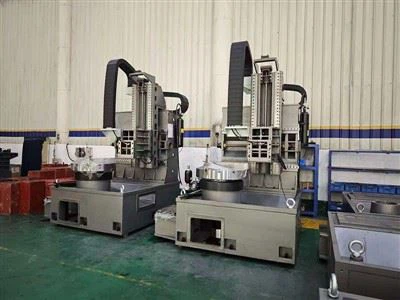
First, let’s start with what both actually do at their core, because that’s where people mess up the basics. Every drilling and tapping center cuts holes or threads into parts, right? But the number of “working heads” (those spindles that spin the drill bit or tap) is where the line gets drawn. Single-spindle rigs have just one spindle. Multi-spindle models? They got two or more spindles hooked up to work at the same time—usually all aimed at the same part, or different parts on the same worktable. Let’s dive deeper into the real differences, not just textbook definitions, because that’s what matters when you’re shopping.
Let’s start with single-spindle drilling and tapping centers. These are the workhorses that every beginner shop or job shop owner starts with. I see guys come in here all the time with a used single-spindle unit they picked up for $8k to run custom wood fixtures, prototype metal brackets for local construction companies, or even small-batch medical parts where every hole needs 100% precision. The big thing about single-spindle is flexibility. One second you’re drilling a 1/8” hole in aluminum at 2,000 RPM, the next you can retool the same spindle to tap M3 threads in plastic 10 seconds later—since there’s only one head, you don’t have to coordinate 3 or 4 separate tools to fit around each other. That’s a huge win if your work is all over the place: today you’re making door hinges, tomorrow you’re drilling holes in guitar necks, next week you’re tapping small screws for phone casings. No reconfiguring half the machine to switch tasks.
Now, the downside of single-spindle? Speed, obviously. If you’re running a batch of 1,000 engine brackets that need 6 holes each, a single-spindle rig will drill and tap one hole at a time, meaning each part takes 15 seconds, maybe 20 if the threads are deep. Let’s do the math: 1,000 parts × 20 seconds = 20,000 seconds, that’s over 5.5 hours of straight machine time to get them done. If you’re running that as a job shop, your customer will expect the order in 3 days, but if you tie up your only machine for half a shift, you can’t take that small custom bracket order for another shop that pays double. I’ve had a customer who ran a small fabrication shop tell me he used to lose $2k a month because he could never juggle big batches and small rush jobs—until he upgraded, but we’ll get to that. Also, single-spindle rigs are way simpler to set up and program, right? Most use basic G-code that any entry-level machinist can learn in a week, not two months for multi-spindle. No fancy calibration for multiple spindles lining up, no worrying about spindle sync issues (I’ve heard horror stories of multi-spindle units where one head is off by a tenth of a mm and ruins a whole batch of $500 aircraft parts).
Okay, now multi-spindle drilling and tapping centers. These are the speed monsters, no cap. The setup is usually two, four, even six spindles all working on the same part or separate parts at the same time. Let’s use that same engine bracket example: a 4-spindle unit would drill all 6 holes? Wait no, actually, usually each spindle handles a couple holes—say two spindles drill two holes each, the other two tap two each, so total 6 holes at once. That 20 seconds per part on single-spindle? More like 5 seconds per part. So 1,000 parts would be 5,000 seconds, that’s about 1.4 hours. Game changer for high-volume stuff. I work with a big automotive parts manufacturer that runs 100,000 brake caliper brackets a month—they had three single-spindle rigs tying up 3 machinists 24/7, until we replaced two with multi-spindle units. Now one machine and one machinist handles all that volume, and they reallocated their other guy to do quality checks instead of babysitting a machine. That’s the other big win for multi-spindle: consistency. If all spindles are calibrated right, every hole is the same depth, every thread has the same pitch, no human error (well, mostly—spindle calibration is a thing, but that’s part of routine maintenance). For industries where parts have to meet strict ISO or automotive specs, that’s non-negotiable. No more worrying about some parts having slightly off threads because the machinist rushed and adjusted the spindle half a mm wrong.
But wait, multi-spindle isn’t all rainbows and speed. The big catch is flexibility. If you get a 4-spindle unit set up specifically for those engine brackets, and then tomorrow you get an order for guitar necks that only need two holes, you’re wasting two spindles. Worse, if you get an order for a part that needs 8 holes, your 4-spindle rig can’t do it without a total retool and spindle add-on, which costs half the price of the machine itself. I had a customer who ran a small custom motorcycle shop a couple years back—he bought a 4-spindle rig because he saw a deal on Facebook, thinking he’d make lots of engine brackets for local shops. Turns out 90% of his work is custom handlebars and fenders that only need 1-2 holes, so he’s been using half the machine’s capacity for two years, and he can’t sell it because it’s set up specifically for those brackets. That’s a huge sunk cost. Also, multi-spindle rigs are way more expensive upfront. A good single-spindle drilling and tapping center runs between $10k and $30k, depending on specs. A 4-spindle unit is $30k to $80k, and if you want one that can be reconfigured for different parts? Add another $15k minimum. Plus, maintenance is a pain—more spindles mean more parts that can break, more calibration checks every week, not every machinist knows how to fix a multi-spindle unit if something goes wrong. I had a guy call me at 2AM once because his 6-spindle rig threw a spindle mid-batch of medical parts, and he couldn’t get a tech out till the next day, so he lost a $12k rush order because he couldn’t hit the delivery date. Single-spindle units? 9 times out of 10, you can swap out a drill bit or fix a jam yourself without a outside tech.
Let’s also talk about two other things that matter a lot to most shop owners: floor space and labor. Single-spindle rigs are compact—you can fit one in a 5×5 foot spot, even in a small garage shop. Multi-spindle units are bigger, need a dedicated spot with better power (since they’re running multiple motors at once), and some even need compressed air setups that single-spindle doesn’t. And labor: with single-spindle, you can have one machinist running two machines at once, since most of the work is automated (it drills, taps, and cycles on its own). With multi-spindle, if you’re running a high-volume batch, you might need someone dedicated just to loading and unloading parts, because the machine is running so fast. That adds to your labor costs, which can eat into your savings from faster production.
Wait, and let’s not forget about small vs. large runs. This is the make-or-break for most people. If your average batch is under 500 parts? Single-spindle is almost always better. The time you spend reconfiguring a multi-spindle unit to fit the small part will cost you more than running it on a single-spindle. I had a prototype engineer come to me last year, he needed 200 custom brackets for a space startup, and he almost bought a multi-spindle rig. I talked him into a single-spindle, he ran the order in 2 hours, reconfigured the machine to tap custom screws the next day, and saved $22k he would’ve wasted on a machine he’d use once. On the flip side, if your average batch is 5,000+ parts, multi-spindle is the only way to go. The speed cuts are massive, and the per-part cost drops way lower than single-spindle. That automotive guy I mentioned earlier? His per-part cost for the brackets went from $0.45 each to $0.12 each after switching to multi-spindle, because he’s not wasting machine time and labor on each part.
Also, let’s clear up a common myth: multi-spindle isn’t always better for precision. Wait, what? Yeah, because if you’ve got 4 spindles all on a part that’s warped a tiny bit, one spindle might drill a hole that’s off by a tenth of a mm, and you might not catch it till you have 1,000 bad parts. Single-spindle lets you check each hole as you go, or adjust on the fly if the part is slightly off. I’ve had a customer who makes custom aerospace brackets, he uses single-spindle for prototype and small batches because he can adjust the spindle mid-run if a part has a tiny warp, but for high-volume production of the same bracket (same exact design, no warpage), he uses multi-spindle because the consistency is better once it’s set up right. That’s the key: multi-spindle precision only shines when the part and design are fixed, no surprises. Single-spindle precision shines when you’re dealing with variable parts or prototypes.
Now, let’s talk about who each is for, because that’s what you actually need to figure out. If you’re just starting out, or your work is mostly custom, small batches, prototypes, or you switch jobs every week (one day furniture parts, next tech parts, next automotive parts), single-spindle is your guy. It’s cheaper, easier to learn, flexible, and works for whatever you throw at it. If you’re a high-volume manufacturer, doing the same part over and over, batch sizes of 5,000 or more, you have dedicated machinists, and floor space/ budget isn’t a huge issue? Multi-spindle is the only way to go. It cuts lead times, lowers per-part costs, and keeps consistent quality.
Wait, but what if you’re in the middle? Like, you do some small custom jobs and some medium batches of 1,000 parts? There are options now, right? We make hybrid single-spindle/multi-spindle units that can switch between 1 and 2 spindles, so you get flexibility when you need it and speed when you need it. They’re a bit more expensive than a basic single-spindle, but way cheaper than a dedicated multi-spindle, and a lot of our customers in that middle spot (like small to mid-sized shops) love them. I sold one last year to a shop that does both custom parts for local businesses and medium batches for a HVAC company. He runs the custom stuff on single-spindle mode, the HVAC batches on two-spindle mode, and says it’s cut his order turnaround time by 40% without forcing him to buy a whole new machine.
At the end of the day, the worst mistake I see shop owners make is buying a machine based on what their buddy has, or what looks like a better deal, without figuring out their own work flow. I’ve had guys come in with a $50k multi-spindle unit that’s sitting in the corner because they can’t use it for half their orders, and guys who bought a $10k single-spindle unit and then realized they needed speed for high-volume work and had to upgrade 6 months later, wasting another $25k. That’s why we always ask customers a list of questions before we even show them a machine: what’s your average batch size? How often do you change parts? What materials do you drill (aluminum, steel, plastic)? What’s your lead time goal? How much floor space do you have? No pressure, just real answers to make sure you get what works for you, not what’s flashy or overkill.
If you’re still stuck, or you want to talk through your specific shop needs, don’t hesitate to reach out. We’re not the kind of supplier that will push a $80k multi-spindle unit on a guy who needs a $15k single-spindle. We just sell drilling and tapping centers, and we help people pick the right one for their work, no hidden fees, no weird fine print. Whether you’re a one-man shop just starting out or a manufacturing floor looking to upgrade your line, we’ve got options that fit.
XY Linear Way Vertical Machining Center References
- Machining Data Handbook, 4th Edition, Modern Machine Shop, 2021.
- “Multi-Spindle vs. Single-Spindle Machining: A Practical Guide,” Manufacturing Engineering Association, 2022.
- Customer Case Studies: Small Shop Machining Solutions, Industrial Supply Journal, 2023.
Smartech Machinery & Equipment Co., Ltd.
As one of the most professional tapping center machine manufacturers and suppliers in China, we also support customized service. Please rest assured to buy bulk tapping center machine made in China here from our factory. Contact us for more details.
Address: Room 2832, Changping Commercial Mansion, Shihua Road, Futian Free Trade Zone, Shenzhen, China
E-mail: smartech@smartechcnc.cn
WebSite: https://www.smartech-cnc.com/
