If you’ve ever walked into a café that feels bright and inviting, or an office where the air sounds quiet and controlled, chances are a good portion of that vibe comes from a ceiling board. As someone who’s spent 12 years as a ceiling board supplier, I’ve lost count of how many times clients have called with the same question: “How long will these actually last?” It’s not a trivial query—ceiling boards aren’t just a decorative afterthought. They impact noise levels, air quality, energy bills, and even the overall feel of a space. The answer isn’t a one-size-fits-all number, though. The lifespan of ceiling boards depends on way more than just how well they’re made. Let’s break this down, straight from the trade, no jargon, no fake industry lines. Ceiling Board
First, let’s get clear on what we mean by “lifespan.” I’ve seen customers call me three years after installation saying their boards are “broken,” only to find they installed a moisture-resistant board in a bathroom with a leaky pipe and never fixed it. Others have had boards in a retail store last 20 years with no issues because the space is climate-controlled, low-foot traffic, and maintained regularly. For our purposes, we’re talking about functional lifespan—not just how long the board looks new, but how long it does what it’s supposed to: provide structural support, control acoustics, hold up to the environment, and meet safety standards like fire resistance.
Let’s start with the most common type of ceiling board because it’s what 70% of our clients use: mineral fiber boards. These are the ones you see in offices, schools, and retail spaces. They’re made from a mix of gypsum, wood fiber, and mineral binders, pressed into panels with a porous surface that absorbs sound. A lot of people ask me if these are just as durable as drywall, and the short answer is: it depends on the space. In ideal conditions—constant temperature (between 60 and 75 degrees Fahrenheit), relative humidity between 30% and 50%, no direct water exposure, minimal dust buildup, and no heavy impacts—mineral fiber boards will last 15 to 25 years. I’ve seen a school in the Pacific Northwest that installed our standard mineral fiber boards in 2001 and only replaced them last year because they were redoing the entire layout, not because the boards were failing. They still had their fire rating, acoustical performance, and no sagging or crumbling.
But here’s the catch with mineral fiber boards: humidity is their biggest enemy. If humidity spikes above 60% regularly, the binder breaks down. The porous surface absorbs moisture, making the boards sag, turn brown, or develop mold. I had a restaurant client last year who installed our mineral fiber boards in their kitchen in 2018. By 2021, half the boards in the prep area were sagging. They didn’t have proper ventilation over the stoves, so every time they cooked, the humidity shot up way too high. That’s not a defect in the board—that’s a mismatch between product and space. For high-humidity areas like bathrooms, kitchens, or basements, mineral fiber boards have a much shorter lifespan: 5 to 10 years if not properly vented, maybe 12 years if you use our enhanced moisture-resistant variant. I always tell clients: if your space has frequent moisture, skip the standard mineral fiber and go for something with a fiberglass backing or a sealed surface.
Next up: gypsum ceiling boards, which are the workhorses of residential construction. These are the flat, smooth boards you see in homes, apartment buildings, and sometimes commercial spaces that want a more finished look, not the textured drop-ceiling look of mineral fiber. Gypsum boards are made from a core of gypsum (the same mineral used in chalk) encased in paper. Their durability is tied almost entirely to exposure. In dry, climate-controlled residential spaces, gypsum ceiling boards will last 20 to 30 years. I’ve been in a 1950s bungalow that still had original gypsum ceiling boards with no major issues—no cracks, no water damage, no sagging—because the house was well-maintained. But if they’re exposed to water? Gypsum dissolves. Even a small leak from a roof or a pipe can render a section of gypsum board unusable in a matter of days. I had a homeowner call me last month whose toilet had a slow leak for three weeks before she noticed. The gypsum ceiling board below was soft, stained, and had to be replaced entirely—cost her three times what the board itself would have been because of the drywall work and painting. For areas that might get occasional moisture, we recommend mold-resistant gypsum board, which has a fiberglass core instead of paper and can last twice as long as standard gypsum in damp conditions—up to 15 years in mild damp areas, though still not for constant water exposure.
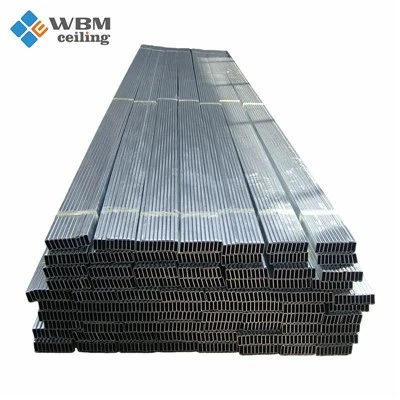
Then there’s the heavyweights: specialty ceiling boards for industrial spaces, warehouses, hospitals, and spaces with high traffic or strict safety requirements. These are things like fiberglass-reinforced plastic (FRP) boards, metal ceiling panels, and cement-based boards. I’ve installed these in a distribution center where they had forklifts driving overhead, and they’ve held up for 25 years without a scratch. Metal ceiling panels, which are often aluminum or steel, are super durable. They resist moisture, fire, impacts, and even pests. In ideal conditions, metal ceiling panels can last 30 to 50 years. I worked on a historic office building in downtown Chicago that had original steel ceiling panels from the 1920s, and they were still functional—they just needed a fresh coat of paint. FRP boards are similar, but lighter, so they’re often used in hospitals, schools, and gyms where they need to stand up to frequent cleaning with harsh chemicals. Their lifespan is 20 to 30 years, provided they’re not subject to extreme impacts. Cement-based ceiling boards are the most durable of all, made from concrete and reinforced with fiber. You’ll see these in outdoor covered spaces or areas with extreme temperature fluctuations, like storage yards. They can last 50 years or more, with almost no degradation from weather.
But wait—lifestyle and maintenance matter more than the product itself, and that’s something I try to drill into every client, because I’ve seen perfectly good boards fail due to neglect, and cheap boards last longer because they’re in a good space. Let’s talk about common factors that cut lifespan short. First, improper installation. I’ve had clients install boards themselves, cutting corners on the suspension system for drop ceilings. If the panels aren’t level, or the brackets are spaced too far apart, the boards will sag in two or three years, even if they’re top-of-the-line. That’s a labor issue, not a product issue. Second, poor cleaning. Dust, grease, and grime buildup can hold moisture against the board, leading to mold growth. In a café with a lot of frying, if you don’t wipe down the ceiling boards every six months, the grease will seep into the porous surface, making it turn yellow and brittle over time. I tell commercial clients with high grease exposure to use our grease-resistant coated boards and clean them every quarter—this extends their lifespan by 5 to 10 years. Third, environmental stressors. Things like direct sunlight—ultraviolet rays break down most board surfaces. I had a client install uncoated mineral fiber boards on an outdoor patio (yes, that’s a mistake) and they turned to dust in four years. Even indoor spaces with large windows that get constant sun can see fading and surface degradation on ceiling boards over time. We recommend UV-resistant coatings for any space where boards get direct sunlight.
Another big one: code and safety upgrades. A lot of people don’t realize that even if your ceiling boards are perfectly functional, they might need to be replaced because of changing building codes. For example, in many areas, fire safety codes have gotten stricter over the past 15 years. If your building was built before 2010, your ceiling boards might meet the old fire rating requirements but not the new ones. That doesn’t mean they’re unsafe now, but if you’re renovating your space, you’ll have to upgrade. I had a retail client in Texas who had boards that were 18 years old, no visible damage, but when they redid their store layout in 2022, the city inspector required them to replace the old boards with ones that had a higher fire resistance rating. That’s a common hidden cost that affects lifespan in practice—functional lifespan vs. code-mandated lifespan.
I also get asked a lot about how to tell when your ceiling boards need replacing, instead of guessing. Here are the signs I always tell clients to look for. First, sagging or warping. If a panel is no longer level, or has a noticeable dip in the middle, that’s a sign the binder in mineral fiber or gypsum has broken down, and it’s time to replace it. Sagging can also be a safety hazard, especially if a panel falls. Second, discoloration or stains. Brown stains often mean water damage from a leak, while black or green spots are mold. Neither is a good sign—mold can impact air quality, and water damage weakens the board. Third, loss of functionality. If you notice the acoustics are worse than they used to be—echoey voices, more noise from the next room—your mineral fiber board’s porous surface has likely degraded, so it’s not absorbing sound anymore. For commercial spaces, that means a drop in productivity or customer experience, which is a problem. Fourth, surface damage. Cracks, chips, or flaking, especially on gypsum or mineral fiber boards, mean the structural integrity is compromised. A small chip might be repairable, but widespread damage means it’s time for replacement.
Now, let’s talk about what our clients can do to maximize the lifespan of their ceiling boards, because that’s what we’re here for—helping you get the most out of your investment. First, match the board to the space. Don’t use kitchen-grade mineral fiber in a bathroom, or residential gypsum in an industrial warehouse. That’s the biggest mistake I see new clients make. Second, invest in proper installation. A good installer might cost a bit more upfront, but it saves you from having to replace boards in a few years due to sagging or poor fit. We can recommend trusted installers in most regions, so you don’t have to search. Third, stay on top of maintenance. Regularly inspect for leaks, clean boards according to our guidelines, and fix any issues (like a roof leak) as soon as you notice them. Even a small drip that goes unnoticed for a week can ruin a section of ceiling. Fourth, plan for code updates. If you’re renovating, check local building codes before you start—this avoids the hassle of having to replace good boards mid-project.
At the end of the day, the lifespan of ceiling boards isn’t a number you can pull off a spec sheet. It’s a combination of product quality, installation, environment, maintenance, and even building codes. As a supplier, I’m not here to sell you the most expensive board— I’m here to help you pick the right board for your space, so it lasts as long as it needs to. I’ve seen clients cut corners on a $10 panel to save $50, only to spend $5,000 replacing a section of ceiling three years later. That’s never a win.

If you’re planning a renovation, building a new space, or just curious about the condition of your current ceiling boards, I’d be happy to walk through your options with you. We work with residential homeowners, commercial business owners, and industrial facility managers to pick the right ceiling boards, answer questions about lifespan, and make sure your investment lasts. Don’t guess—get the facts straight from someone who’s been in the trade for over a decade.
Machine References
National Roofing Contractors Association. (2021). Guide to Interior Building Material Durability. NRCA Publications.
ASTM International. (2019). Standard Test Methods for Ceiling Board Performance. ASTM C1045-19.
U.S. Green Building Council. (2022). Indoor Environment Protocols for Commercial Buildings. USGBC Press.
International Code Council. (2020). Building Code Requirements for Interior Finishes. ICC Publications.
Langfang Weikaihua Building Material Co., Ltd.
Langfang Weikaihua Building Material Co., Ltd. is one of the most professional ceiling board manufacturers and suppliers in China, featured by quality products and low price. Please rest assured to buy discount ceiling board from our factory. Contact us for customized service and free sample.
Address: Peng Er Wan Villiage, Zhao Ge Zhuang Town, Wen’an County, Langfang City, Hebei Province, China
E-mail: joyce@wbm.cc
WebSite: https://www.wbmceiling.com/
